Classic · From the Tryoom app
The Trench Coat: A 100-Year Style Guide
The trench was designed for officers in the First World War, refined by Burberry and Aquascutum, and has barely changed since. That's the point.
The Trench Coat: A 100-Year Style Guide
The trench was designed for officers in the First World War, refined by Burberry and Aquascutum, and has barely changed since. That's the point. It's one of fashion's few genuinely timeless silhouettes.
The non-negotiables
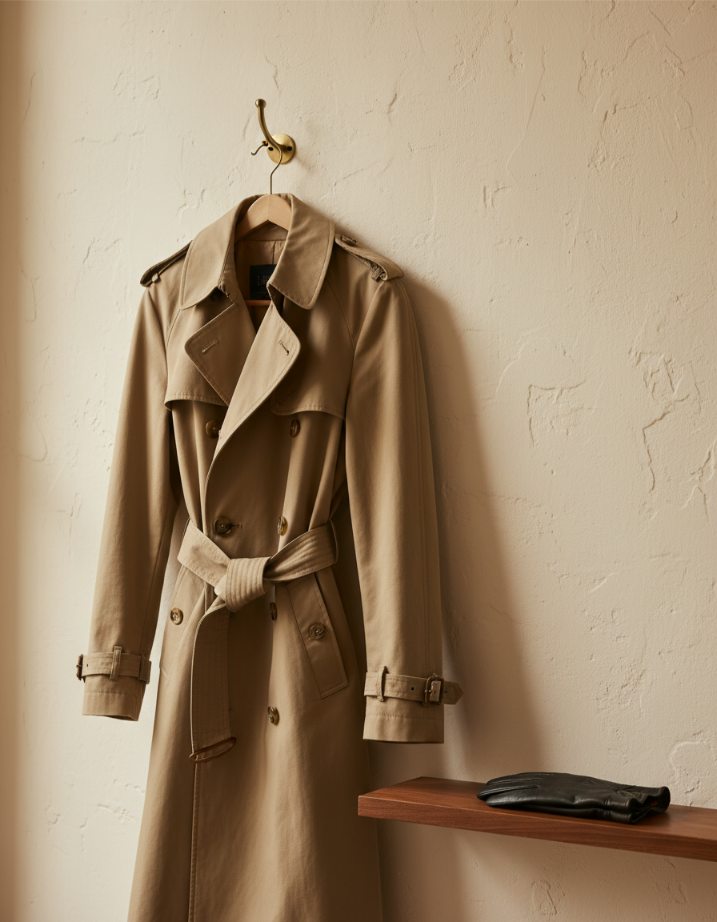
A real trench has these features. Skip them and you're buying a coat that just happens to be beige.
- Cotton gabardine: water-resistant tightly woven cotton. Polyester trenches read cheap.
- Double-breasted front: ten buttons in two rows.
- Storm flap on the right shoulder (originally designed to keep rain off a rifle butt).
- Belt with metal buckle: tied or buckled, never knotted carelessly.
- Raglan sleeves with cuff straps.
- D-ring on the belt (originally for hand grenades, now for keys or nothing).
Length
- Knee or just below: the most flattering and traditional length.
- Mid-thigh: modern, more casual, harder to wear over suits.
- Mid-calf or longer: dramatic, requires height and confidence.
How to wear it
- Belted, never tied loosely behind your back. The belt is structural, not decorative.
- Over a suit: collar down, belt buckled.
- Over jeans: collar up, belt knotted at the side, sleeves pushed up.
- Open and unbelted only on warm days when it's a layering piece, not a coat.
Color
Beige is correct. Black is fine. Navy is for people who already own beige. Anything else (pink, leopard, vinyl) is fashion, not a trench.